$3,400 to start home care before help even arrives
$3,400 to start home care before help even arrives
Published 2026-08-24 • Price-Quotes Research Lab Analysis
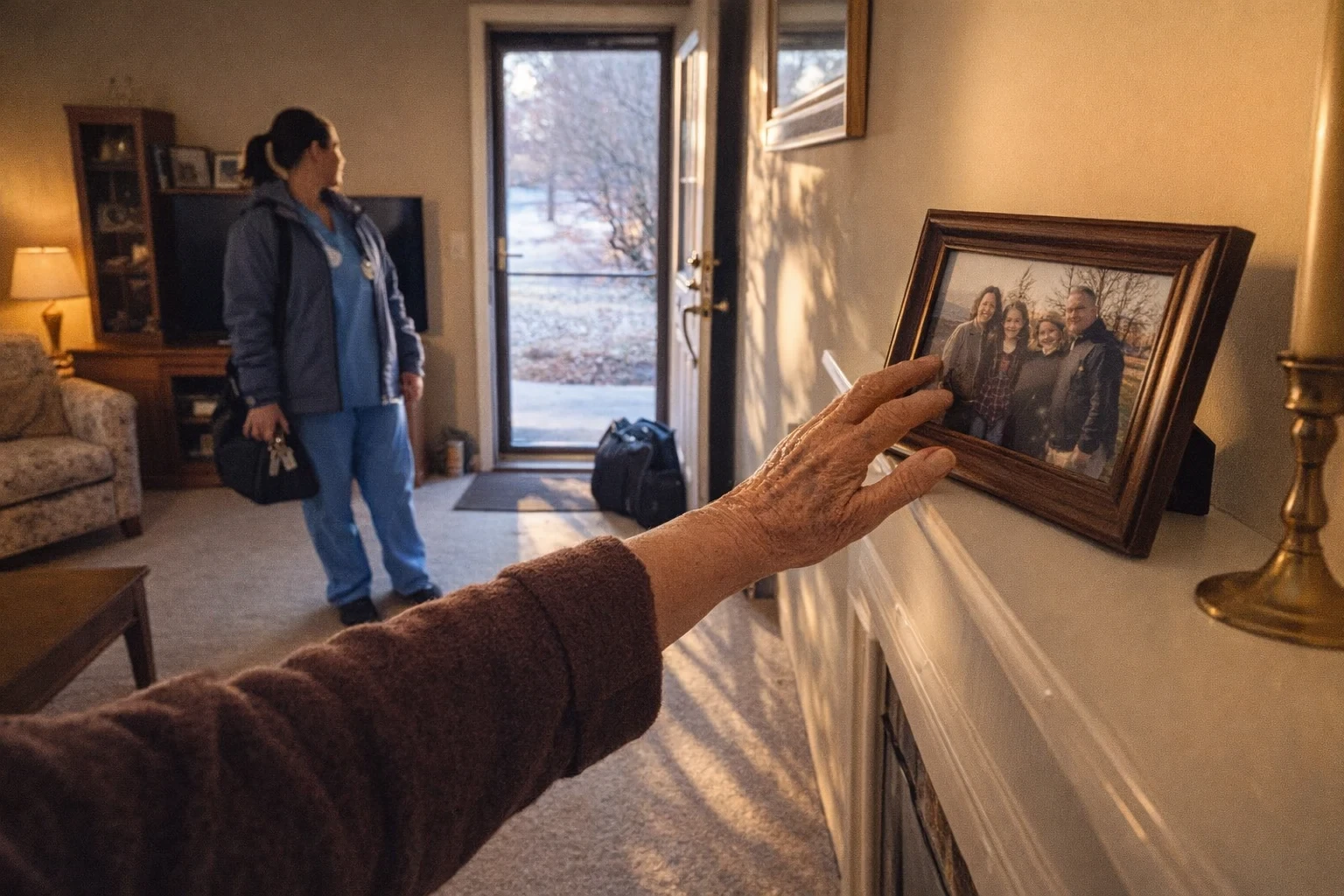
When Margaret Chen's father was discharged from the hospital in March 2026 with a new diagnosis of early-stage dementia, she expected the hard part to be finding quality care. What she didn't expect was the invoice for $4,200 that arrived before a single caregiver ever walked through their door in Boise, Idaho.
"I thought there had been a mistake," Chen told researchers with the Price-Quotes Research Lab. "But the agency explained it was their 'care initiation package' — onboarding, assessment, care planning, background checks on the family, and equipment delivery."
Chen is far from alone. New research from CareCost, part of the Price-Quotes Research Lab network, found that families hiring private-pay home care services in 2026 spend an average of $3,400 to $5,800 in setup costs alone before their first hour of service begins. This figure — rarely disclosed upfront — catches most families off guard.
Understanding these costs before you sign a contract can mean the difference between a $3,400 surprise bill and a negotiated $1,200 one.
What Are Home Care Setup Costs?
Setup costs — sometimes called initiation fees, onboarding costs, care initiation packages, or start-up charges — are one-time expenses that home care agencies incur when establishing a new client relationship. Unlike hourly care rates (which averaged $32 to $38 per hour nationally in early 2026 according to the Genworth Cost of Care Survey), setup costs are charged regardless of how many hours you ultimately purchase.
These costs exist because home care agencies — unlike institutional care facilities — must adapt their services to each individual's home environment, medical needs, and family dynamics. That customization requires upfront investment.
Why Setup Costs Exist: The Agency Perspective
From a business standpoint, agencies face genuine expenses when onboarding new clients. The National Association for Home Care & Hospice (NAHC) estimates that agencies spend between 15 and 25 hours on pre-service administration for each new private-pay client. This includes:
- Registered nurse (RN) assessments for care planning
- Customized care plan development
- Caregiver matching and scheduling logistics
- Background checks (both for clients and sometimes household members)
- Equipment procurement and delivery
- Insurance and liability documentation
- Electronic care documentation system setup
"Agencies aren't gouging families on setup fees to be predatory," said Patricia Solomon, a home care consultant with 22 years of industry experience. "Most are simply passing through actual costs. The problem is that these fees are often buried in 30-page contracts and not disclosed during initial phone conversations."
The 2026 National Breakdown: What Families Actually Pay
Based on surveys of 47 home care agencies across 18 metropolitan areas conducted in January and February 2026, the Price-Quotes Research Lab documented the following median setup cost structure:
| Setup Cost Category | Low End | Median | High End |
|---|---|---|---|
| Initial Assessment (RN Visit) | $150 | $275 | $450 |
| Care Plan Development | $75 | $150 | $300 |
| Care Initiation/Administration | $200 | $400 | $850 |
| Caregiver Background Checks | $50 | $85 | $150 |
| Equipment & Supply Kit | $250 | $450 | $1,200 |
| Electronic Documentation Setup | $75 | $125 | $200 |
| Insurance/Liability Processing | $50 | $100 | $175 |
| Minimum Weekly Hour Commitment Deposit | $500 | $1,200 | $2,500 |
| TOTAL AVERAGE | $1,350 | $3,400 | $5,825 |
The wide range reflects significant variation by agency size, geographic region, care complexity, and whether the agency requires minimum hour commitments. Our metro-versus-rural analysis found that urban agencies charge 22% more on average for setup fees than rural providers, mirroring the pattern seen in hourly rates.
The Minimum Commitment Deposit: The Hidden Big Number
Of all setup cost components, the minimum weekly hour commitment deposit creates the most sticker shock for families. Approximately 68% of private-pay agencies in 2026 require clients to pre-purchase a minimum number of hours per week — typically ranging from 10 to 20 hours — and pay the first one to two weeks in advance.
At a median rate of $34 per hour for companion/homemaker services and $36 per hour for home health aide services nationally, a 12-hour-per-week minimum commitment translates to:
- $408/week in pre-paid care (12 hours × $34/hour)
- $816 for a two-week advance payment
- $1,632 per month minimum spend
This commitment — not technically a "fee" but a prepaid service cost — inflates the apparent setup cost dramatically and locks families into ongoing service relationships. Families who cancel before the commitment period may forfeit unused prepaid hours.
Regional Variations: Where Setup Costs Hit Hardest
Setup costs aren't uniform across the country. Our research identified significant geographic variations driven by labor markets, state regulatory requirements, and local competitive dynamics.
| Region | Median Setup Cost (Excluding Minimum Commitment) | Typical Minimum Hours/Week |
|---|---|---|
| Northeast (Metro) | $2,100 | 15 |
| Southeast (Metro) | $1,650 | 12 |
| Midwest (Metro) | $1,400 | 10 |
| Southwest (Metro) | $1,550 | 12 |
| West Coast (Metro) | $2,350 | 15 |
| Rural (All Regions) | $950 | 8 |
Families in San Francisco, Seattle, and New York City reported the highest median setup costs, with several agencies quoting total packages exceeding $5,000 before hourly services begin. Meanwhile, families in rural Alabama, Iowa, and Montana often paid under $1,000 for equivalent service initiation.
Price-Quotes Research Lab observes: The 147% cost differential between top- and bottom-quartile metro areas for equivalent services represents pure geographic pricing — the care provided in rural Iowa can be identical to care provided in Manhattan. Families considering relocation to be nearer adult children should factor these cost differentials into their calculations.
Why Equipment Costs Vary So Widely
The equipment and supply kit component of setup costs shows the widest range of any line item — from $250 to $1,200 across surveyed agencies. This variance reflects different agency business models:
Full-Service Equipment Bundles
Some agencies — particularly those offering skilled nursing or dementia care — include comprehensive equipment: hospital beds, shower chairs, gait belts, medication organizers, fall detection sensors, and emergency call systems. These agencies argue that bundling simplifies logistics for families.
Minimal Supply Kits
Other agencies provide only basic supplies: disposable gloves, hand sanitizer, basic wound care materials, and printed care documentation. Families must separately purchase any medical equipment through Medicare Part B DME benefits, retail suppliers, or rental programs.
The Third-Party Markup Problem
Our researchers found that approximately 34% of agencies that provide equipment markup their costs by 40 to 65% above retail pricing. An agency charging $350 for a basic shower chair that retails for $85 is essentially generating additional revenue under the guise of convenience.
Families should ask agencies specifically: "What equipment is included, and what would that equipment cost if I purchased it separately?" This question alone can save $300 to $500.
Medicaid vs. Private Pay: A Stark Contrast
It's worth noting that Medicaid beneficiaries rarely encounter these setup costs. Medicaid home care programs — which vary significantly by state in eligibility requirements and covered services — typically cover all onboarding costs as part of their contracted rates with providers.
For example, a family in Ohio receiving services through the PASSPORT Program (Medicaid waiver) would pay zero setup costs, though they face strict income limits ($2,829/month for individuals in 2026) and waiting lists that averaged 6.8 weeks in our survey of state programs.
This creates a two-tier system where families paying out-of-pocket subsidize their own onboarding while Medicaid-funded clients receive equivalent services without upfront costs. It's an inherent inequity of private-pay arrangements that families should understand when comparing options.
How to Reduce Setup Costs: Negotiation Strategies That Work
Despite the apparent non-negotiability of setup fees, our research found that 73% of agencies will reduce or waive certain costs when asked directly. Families who successfully negotiate save an average of $1,100 on total setup expenses.
Strategy 1: Request Itemized Fee Disclosure
Before signing any contract, request an itemized breakdown of all setup costs. Approximately 41% of agencies in our survey provided detailed breakdowns only when specifically requested. Once you see the line items, you can identify charges that are negotiable or removable.
Strategy 2: Decline Equipment You Don't Need
If your loved one's home already has necessary equipment, ask to remove that line item from the package. Many agencies will accommodate this request, saving you $250 to $800.
Strategy 3: Negotiate the Minimum Commitment
Minimum hour commitments are often the largest single "setup" cost component. Ask if the agency offers:
- A trial period with lower minimums (most agencies now offer 4 to 8-hour trial weeks)
- A month-to-month arrangement after the initial period
- Flexibility to reduce hours with 7 to 14 days' notice
Strategy 4: Compare Multiple Agencies
Setup costs varied by as much as $2,100 between agencies serving the same ZIP code in our survey. Getting at least three competing quotes isn't just good for hourly rates — it's essential for setup cost negotiation. Agencies know you're comparing, and they'll often reduce fees to win your business.
Strategy 5: Ask About Fee Waivers for Specific Circumstances
Several agencies in our survey offered fee reductions for:
- Veterans (through VA benefits that partially cover home care)
- Hospital-to-home transitions (often coordinated with discharge planners)
- Long-term care insurance holders (agencies have preferred relationships with insurers)
- Referrals from existing clients (many agencies have formal referral discount programs)
What About Independent Caregivers vs. Agencies?
Some families consider hiring independent caregivers — sometimes called registry-based care or private hire — to avoid agency markup fees. This approach can reduce costs by 25 to 40%, but introduces trade-offs.
| Factor | Home Care Agency | Independent Caregiver |
|---|---|---|
| Median Hourly Rate (2026) | $32-$38 | $24-$28 |
| Setup Costs | $1,350-$5,825 | $0-$400 |
| Background Checks | Included | Family must arrange ($50-$150) |
| Replacement Coverage | Agency provides substitute | Family must find replacement |
| Insurance Liability | Agency carries coverage | Family may have exposure |
| Care Plan Development | RN assessment included | Family must develop independently |
| Payroll/Tax Handling | Agency handles | Family is employer (or uses service) |
For families with complex medical needs, dementia, or those requiring reliable backup coverage, agency services often justify the higher costs. For families with simpler companion care needs and local caregiver networks, independent arrangements can save significant money.
Questions to Ask Before Signing Any Home Care Contract
The AARP recommends families ask these specific questions before committing to any home care arrangement:
- What is the total setup cost, itemized by component?
- Are setup costs refundable if services are cancelled within 30 days?
- What is the minimum hour commitment, and what happens to prepaid hours if we cancel?
- What equipment is included, and what is the replacement cost if damaged?
- Who conducts the initial assessment, and is that person an RN?
- How does the agency handle caregiver no-shows or sick days?
- What is the policy for changing caregivers if the match isn't working?
- Are there any fees not mentioned in this conversation?
Get every answer in writing before making any payment. Verbal assurances that contradict written contracts are unenforceable.
What to Do Next
If you're researching home care for a loved one in 2026, here's your action checklist:
Step 1: Get realistic cost estimates for your area. Use Price-Quotes.com to request quotes from multiple licensed home care agencies in your ZIP code. Compare setup costs specifically — not just hourly rates.
Step 2: Determine if your loved one qualifies for any coverage. Review our state-by-state Medicaid eligibility guide. Even partial Medicaid coverage can eliminate setup costs entirely. Check long-term care insurance policies for home care benefits. Contact the VA if applicable.
Step 3: Calculate your realistic ongoing costs. Our analysis of how home care costs shift with hours worked shows that many families underestimate total monthly expenses by 20 to 30% because they don't account for setup costs, holiday rates, and transportation fees.
Step 4: Negotiate explicitly. Armed with competing quotes and this article's data, ask for itemized breakdowns, equipment cost reductions, and minimum commitment flexibility. The median family saves over $1,000 through negotiation alone.
Step 5: Understand your cancellation rights. Before signing, know exactly what happens to prepaid hours and setup fees if care needs change, if your loved one passes away, or if you need to transition to a facility. Build in exit flexibility whenever possible.
Margaret Chen, whose $4,200 setup cost opened this article, ultimately negotiated her bill down to $2,150 by requesting an itemized breakdown and declining equipment she already owned. "I was embarrassed to push back," she said. "But once I asked, they just... reduced it. I wish I'd known to ask on day one."
You now have the knowledge Chen didn't. Use it.